
Introduction
Medications such as Zopiclone and Eszopiclone are widely prescribed for short-term insomnia. While effective, their interaction with alcohol is one of the most clinically significant—and potentially dangerous—issues patients face.
Clinicians frequently report that many adverse events linked to hypnotics occur not from the drug alone, but from combining it with alcohol. Understanding these interactions is essential for safe use, particularly in countries with strict prescribing rules such as the UK.
How Zopiclone and Eszopiclone Work
Both medications belong to a class commonly known as Z-drugs. These act on the brain’s GABA-A receptors, enhancing inhibitory neurotransmission and promoting sleep.
Key pharmacological effects:
- Sedation and sleep induction
- Muscle relaxation
- Reduced anxiety
- Slowed central nervous system (CNS) activity
Unlike benzodiazepines, they are more selective—but not risk-free.
What Happens When Alcohol Is Added?
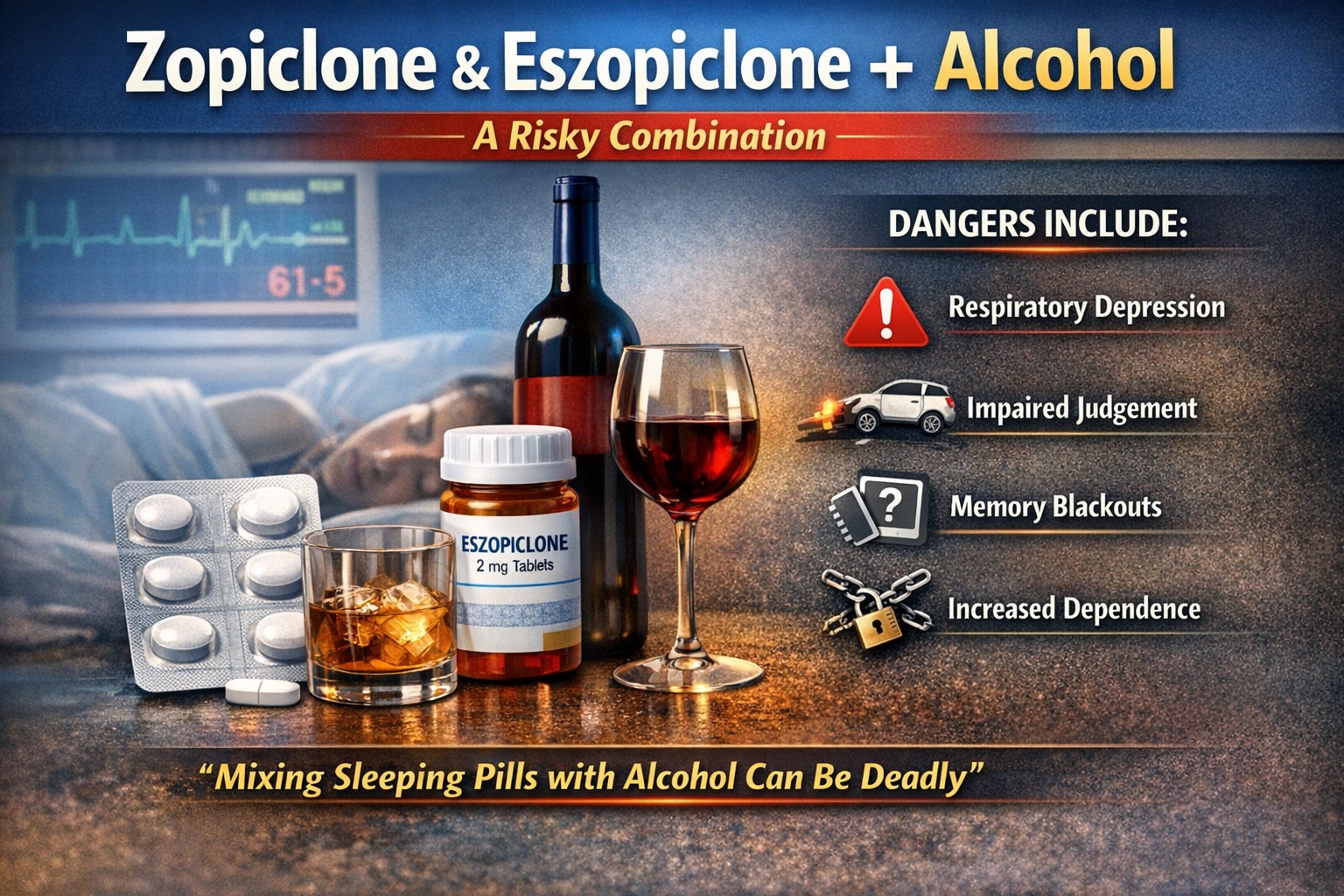
Alcohol is also a central nervous system depressant. When combined with a Sleeping pill like zopiclone or eszopiclone, the effects are not just additive—they can be synergistic, meaning significantly amplified.
Combined effects include:
- Excessive sedation
- Impaired breathing (respiratory depression)
- Severe coordination loss
- Memory blackouts
- Increased risk of overdose
According to the NHS (https://www.nhs.uk/medicines/zopiclone/), patients are specifically advised to avoid alcohol while taking zopiclone due to heightened sedative effects and risk of harm.
Clinical Risks Observed in Practice
Healthcare professionals often observe that patients underestimate how strong this interaction can be. Even moderate alcohol intake—such as one or two drinks—may lead to:
- Sudden sleep onset in unsafe situations
- Falls or injuries during nighttime awakenings
- Confusion or “sleepwalking” behaviors
- Next-day cognitive impairment
These risks are particularly high in older adults or those with underlying respiratory conditions.
Why the Combination Is Dangerous
1. Respiratory Depression
Both substances suppress breathing. When combined, this effect can become life-threatening.
2. Loss of Conscious Control
Patients may engage in activities (eating, driving, walking) without awareness—a phenomenon linked to hypnotics.
3. Increased Dependence Risk
Alcohol and Z-drugs both have dependency potential. Together, they significantly raise the likelihood of misuse.
The FDA (https://www.fda.gov/drugs/postmarket-drug-safety-information-patients-and-providers/fda-drug-safety-communication) has issued safety communications warning about complex sleep behaviors and CNS depression with these medications.
UK Legal and Safety Context
Are Eszopiclone and Zopiclone Legal in the UK?
- Zopiclone: Classified as a Class C controlled drug
- Eszopiclone: Not commonly licensed in the UK but may be imported under prescription
UK zopiclone rules include:
- Prescription-only status
- Short-term use (typically 2–4 weeks)
- Strict monitoring for misuse
Combining alcohol with prescribed hypnotics may also affect liability in accidents or workplace incidents.
Importing Sleep Medication: Legal Considerations
Patients often ask about importing sleep medication UK legality. While some attempt to source medications online, there are risks:
- Seizure by customs if not properly declared
- Receiving counterfeit products
- Lack of medical supervision
When exploring options from Vendors of Zopiclone, it is essential to ensure compliance with UK import laws and medical guidance.
Comparing Zopiclone, Eszopiclone, and Other Options
Patients sometimes consider alternatives such as Zolpidem or Zaleplon.
| Medication | Duration | Alcohol Interaction Risk | Notes |
|---|---|---|---|
| Zopiclone | Medium | High | Bitter taste, strong sedation |
| Eszopiclone | Medium | High | Longer half-life |
| Zolpidem | Short | High | Faster onset |
| Zaleplon | Very short | Moderate-High | Lower residual sedation |
Even newer options still carry significant risks when combined with alcohol.
Patient Experiences and Real-World Insights
Discussions on platforms like Reddit frequently reveal real-world experiences:
- Unexpected blackouts after small alcohol intake
- Severe grogginess the next day
- Episodes of confusion or memory gaps
While anecdotal, these reports align closely with clinical observations.
Brand Variations and Formulations
Different Brands—including generics like Zopisign and Zopicon—contain the same active ingredient but may vary in excipients and release profiles.
Understanding the Ingredients of Zop 7.5 can help patients recognize potential sensitivities, though alcohol interaction risks remain consistent across formulations.
Safer Use Guidelines
If prescribed zopiclone or eszopiclone:
Do:
- Take exactly as prescribed
- Allow a full night (7–8 hours) for sleep
- Inform your doctor of alcohol use habits
Avoid:
- Drinking alcohol before or after taking the medication
- Combining with other sedatives
- Driving or operating machinery after use
Are There Safer Alternatives?
For some patients, non-pharmacological approaches or Alternatives to Zolpidem may be safer:
- Cognitive Behavioral Therapy for Insomnia (CBT-I)
- Sleep hygiene improvements
- Melatonin (in specific cases)
These options eliminate the alcohol interaction risk entirely.
Key Takeaways
- Combining alcohol with zopiclone or eszopiclone is medically unsafe
- Risks include respiratory depression, blackouts, and injury
- UK regulations emphasize controlled, short-term use
- Even small amounts of alcohol can significantly amplify effects
Medical Disclaimer
This article is for informational purposes only and does not replace professional medical advice. Always consult a qualified healthcare provider before starting, stopping, or combining medications, especially with substances like alcohol.
Conclusion
Zopiclone and eszopiclone remain effective tools for managing insomnia—but only when used responsibly. Alcohol fundamentally alters their safety profile, turning a controlled treatment into a potentially hazardous combination.
Patients and clinicians alike must approach these medications with caution, clear understanding, and respect for regulatory guidance.